

Modeling and Sensing Heat at Human Scales: Living Lab Examples from Phoenix, Arizona, USA
lab | Louvain-la-Neuve, Bruxelles Saint-Gilles, Tournai

Extreme heat has wide-ranging impacts on human health, performance, and well-being. Outdoor thermal exposure is shaped by the complex interplay between urban infrastructure and micro- to global-scale climates; interactions that must be understood to effectively mitigate heat in cities. Phoenix, Arizona, with its hot, dry climate, serves as a living laboratory where cooling strategies can be tested in real-world urban environments. This presentation highlights recent research from the SHaDE Lab at Arizona State University on heat mitigation strategies such as trees, engineered shade, and cool pavements. These solutions are evaluated through a combination of field measurements, microclimate simulations, and community-based experiments. Novel sensing techniques capture how heat is experienced at the human scale, including MaRTy (a mobile biometeorological platform that can sense how pedestrians experience heat), MaRTinies (low-cost IoT sensors), and the thermal manikin ANDI, which simulates human thermoregulation under heat stress.
Complementary modeling approaches help quantify and optimize shade distribution and predict thermal comfort outcomes. Together, these methods provide a comprehensive understanding of urban heat and inform practical strategies for designing cooler, healthier cities.
04-12-2025 - 16:30
Loci BXL salle AV02
rue Henri Wafelaerts, 47-51 - 1060 Saint-Gilles (Bruxelles)
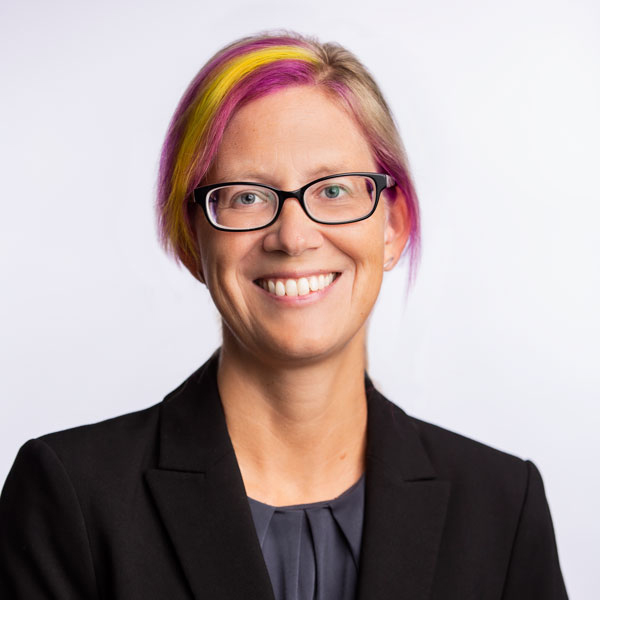 Dr. Ariane Middel is an Associate Professor in The GAME School and the School of Geographical Sciences and Urban Planning at Arizona State University, USA. Her research focuses on climate-sensitive urban form, design, and landscapes in the face of extreme heat and climatic uncertainty. Dr. Middel has advanced urban climate science through applied and solutions-oriented research using unconventional field methods such as MaRTy (a mobile weather station), microclimate simulations, and human-centric modeling. She directs the SHaDE Lab, which explores the “hot” topic in three dimensions: heat as it can be sensed by instruments; heat as it is experienced by humans; and heat as it can be modelled using microclimate simulations and urban climate informatics methods. Dr. Middel is the recipient of an NSF CAREER award on “Human Thermal Exposure in Cities” and the President-elect of the International Association for Urban Climate, IAUC (2022-2026). She also currently serves on the Board of the American Meteorological Society