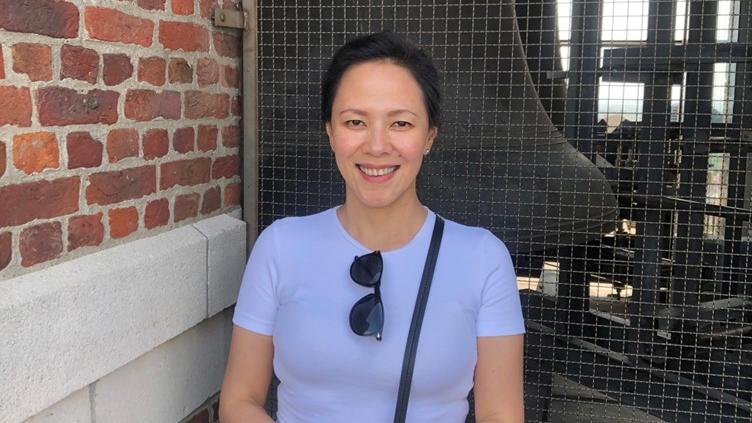
Donna Marie Palaruan - Constituting the Ayta Mag-antsi Sense of Place
espo | Louvain-la-Neuve, Mons
Donna Marie Palaruan
soutiendra publiquement sa dissertation
Constituting the Ayta Mag-antsi Sense of Place :
Attachments, Change and Continuity in a Post-Disaster Milieu
pour l'obtention du grade de doctorat en Sciences politiques et sociales
le mercredi 10 juin
à 14h
Abstract
The Ayta Mag-antsi of Sitio Kawayan, Capas, Tarlac in the Philippines is an indigenous group most severely affected by the eruption of Mount Pinatubo in 1991. The disaster led to a serious disruption of lifeways and displaced thousands of Ayta families who were relocated to resettlement sites. A decade later, the Ayta reclaimed the agency to return to ancestral land in order to reconstruct and sustain sense of place and attachment in a milieu transformed by the eruption. Grounded in Anthropology and Disaster Studies, the research explores how attachments to land and water, and, reliance to memory, cosmology and rituals continue despite displacement, socio-political pressures and a changing milieu. Central to this study is how a people, who experienced forced evacuation and years of separation from ancestral domain, uphold cultural continuity and relationalities with a radically altered milieu.
Using ethnogrphic methods such as life stories, key-informant interviews, participant observation, field notes, workshops, and mapping, this study documents the experiences, narratives and everyday practices of the Ayta Mag-antsi. It highlights how place attachment is expressed through swiddening, gardening, banana blossom harvesting, hunting, fishing, gathering, rituals, stories, chants, dreams, heavenly bodies, traditional healing, and interactions with spirits and the non-human.
Drawing from Basso’s sense of place, Low’s place attachment, Descola’s ontology, Ingold’s dwelling perspective, and Berque’s concept of milieu, this dissertation argues that post-disaster recovery is not solely material but deeply cultural, relational and cosmological manifested in animistic and analogical engagements with milieu. The study further reveals how continuity and change coexist through processes of return and emplacement. Ultimately this research contributes to anthropological discussions on sense of place, indigenous knowledge, and disaster recovery while emphasizing the importance of incorporating indigenous cosmologies and attachments to place into disaster risk reduction and development policies.
Membres du jury
Prof. Frédéric Laugrand (UCLouvain), promoteur
Prof. Olivier Servais (UCLouvain), président du jury
Dr. Lionel Simon (UCLouvain), secrétaire du jury
Prof. Soledad Natalia Dalisay (University of the Philippines Diliman)
Prof. Serge Schmitz (ULiège)
Évènement associé