

Where Can a Phd Take You from LIDAM Research to European Policy Work ?
ires |
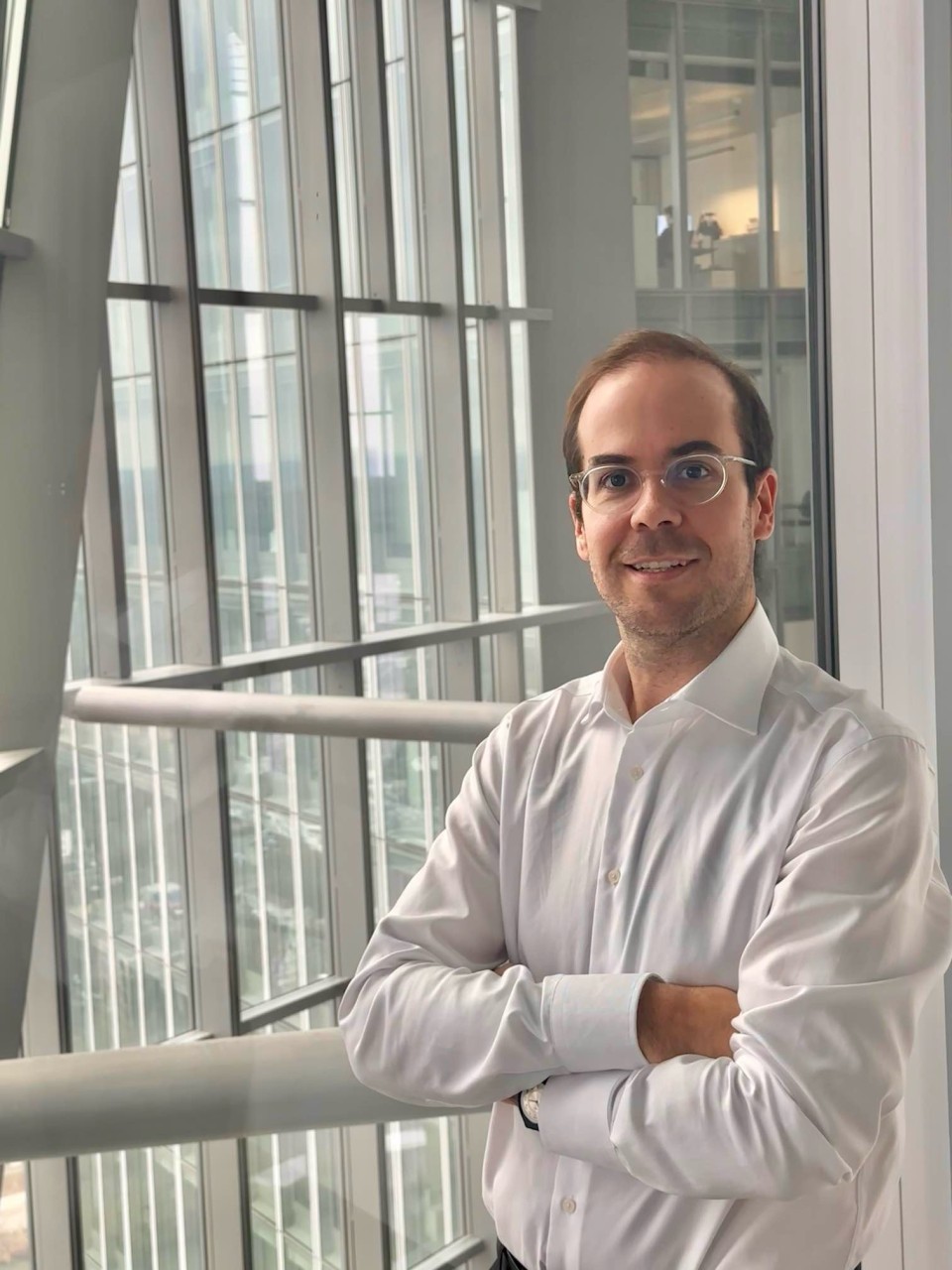
Why start a PhD in macroeconomics, and where can it really lead you? In this Alumni portrait, we follow the trajectory of LIDAM PhD graduate Pablo Aguilar, now working at the European Central Bank. From the first uncertain year of doctoral research to policy modelling at the European level, this interview highlights what a PhD truly builds: analytical depth, intellectual autonomy, and career flexibility.
What made you decide to pursue a PhD, and why at LIDAM UCLouvain?
After my Master’s at UCLouvain, I already felt strongly connected to the macroeconomics department and to my future supervisor. The research agenda matched exactly the topics I wanted to explore further in macroeconomics.
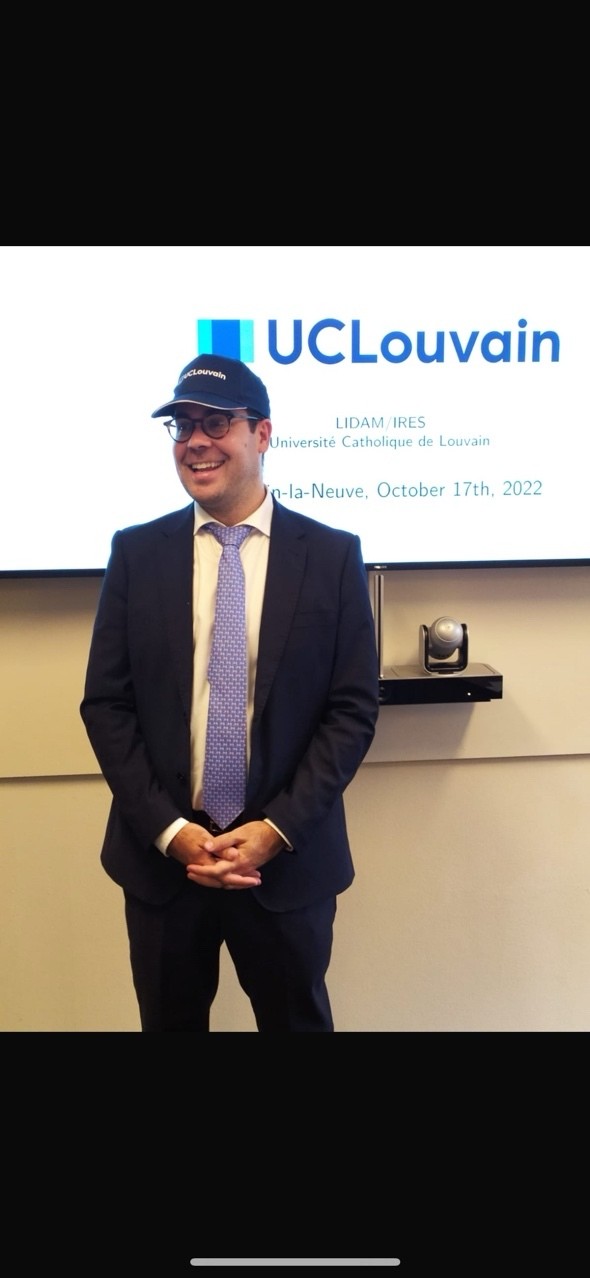
At the same time, LIDAM at IRES offered a highly stimulating research environment, with strong inter-university links, close connections with the National Bank of Belgium, and a very active seminar culture.
“A good PhD environment is not only about a topic. It is about the people, the discussions, and the research network around you.”
How did you experience your PhD years in practice?
The first year was the most demanding. You move from a structured student framework with exams and deadlines to a system where you must define your own milestones. Your progress depends largely on your own discipline and initiative. That shift requires adaptation.
With time, as I presented my work more often and engaged in discussions, my confidence grew. Learning how to defend ideas, accept criticism, and refine arguments was central to my development.
There is also an important turning point during the PhD when you clarify whether you want to move toward academia or policy institutions. I felt supported in exploring both paths and progressively more ready to take the next step.
“The PhD teaches you how to defend your ideas, revise them, and defend them again, better.”
How did the transition to your role at the European Central Bank happen?
It happened progressively. During my PhD, I realized I was increasingly interested in policy oriented work within international institutions. I applied for a PhD traineeship at the European Central Bank, which became a decisive step.
During that traineeship, I worked on policy relevant projects closely connected to my doctoral research. It showed me how theoretical models are used in real time policy discussions.
I was also able to combine work and research for a period. I completed my PhD while holding a permanent economist position, first at the Bank of Spain and later at the European Central Bank.
“The traineeship allowed me to see how academic tools translate into real policy decisions.”
How does your PhD still support your daily work today?
Very directly. Many of the analytical tools and frameworks I built during my PhD are still part of my daily toolbox. This is especially true for macroeconomic modelling and DSGE based analysis.
Beyond technical methods, the PhD trained me in rigorous reasoning about mechanisms and policy transmission. That structure of thinking is essential when working on new topics.
Soft skills also matter a lot. Presenting complex ideas clearly, writing structured analyses, and responding constructively to feedback are crucial in a policy institution.
“My PhD did not just give me methods. It gave me a structured way of thinking about economic problems.”
What does your current role look like in practice?
My work focuses on producing model-based answers to policy questions related to the macroeconomic outlook. This can include topics such as trade tensions or price shocks.
Macroeconomic policy requires internally consistent analysis, not only intuition. Models provide that structure. I contribute both to developing and using these models, and to defining the right assumptions and transmission channels for each question.
In practical terms, it means identifying the relevant mechanisms, quantifying scenarios, and translating complex dynamics into policy relevant insights.
“Our role is to turn economic mechanisms into quantified, policy usable scenarios.”
What would you say to someone hesitating to start a PhD?
A PhD is not only specialization in a narrow topic. It is training in structured and critical thinking. You learn how to simplify complexity, identify the right question, and design a rigorous framework to answer it.
Your PhD topic will probably not be the exact question you work on later. What remains is the know how and the problem-solving framework you develop.
“The most valuable outcome of a PhD is your analytical toolbox, not only your thesis topic.”
Would you make the same choice again?
Yes. The PhD shaped how I think and how I work. It is a strong investment in intellectual capital.
At the same time, it is important to stay realistic. A PhD prepares you, but it does not mechanically determine your final position. Careers also depend on timing, opportunities, and personal choices. What the PhD gives you is solid preparation for many paths.
“A PhD is powerful preparation, not a guaranteed destination.”