

Ecorc’Air 2026: become an active participant in the air quality of your neighborhood
eli | Louvain-la-Neuve
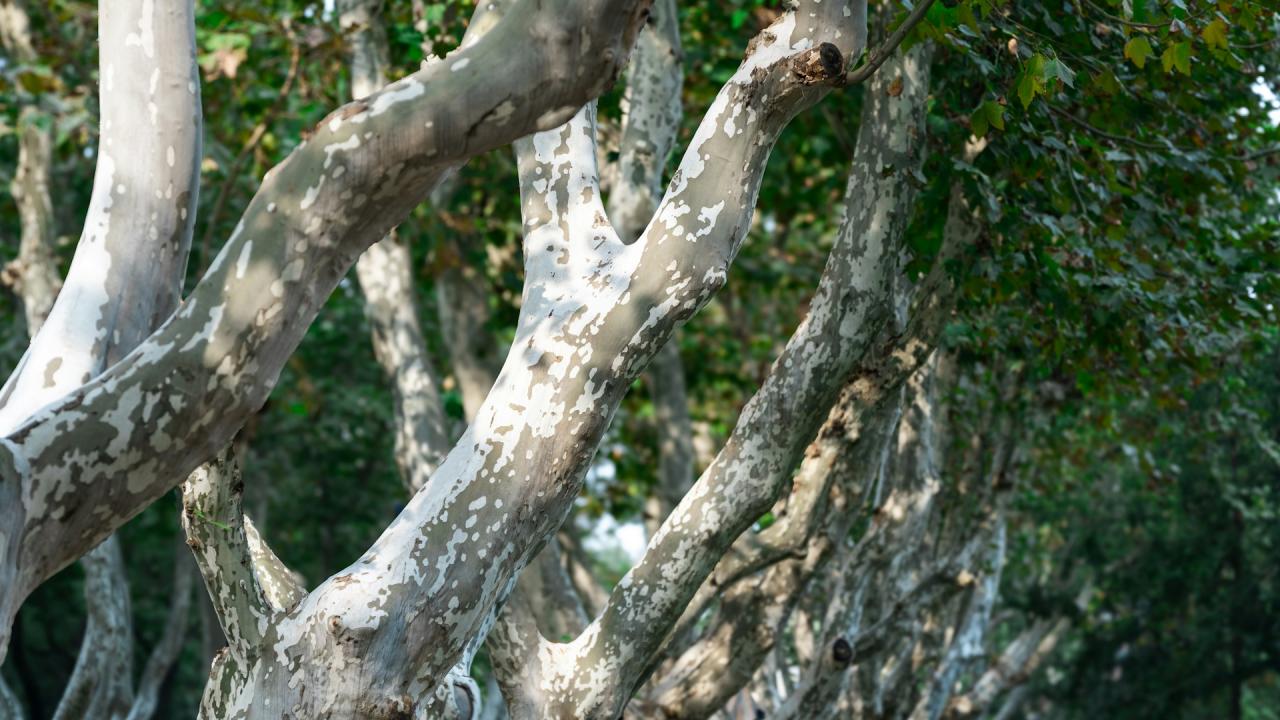
What if the trees in our streets could reveal what we breathe every day? Beneath their bark, plane trees preserve an invisible memory: fine particles coming from traffic and urban pollution.
Starting this spring, a participatory science project launched by UCLouvain, UAntwerpen and Scivil invites citizens to decode these traces… to map air quality, neighborhood by neighborhood.
Each year, fine particles are responsible for thousands of premature deaths in Europe. Invisible to the naked eye, they penetrate deep into the body and are associated with numerous diseases (respiratory, cardiovascular, neurological).
Yet, despite their major impact, their distribution remains difficult to measure precisely at the local scale.
This is where plane trees come into play. During winter, their bark acts as a true pollution trap, capturing fine particles present in the air.
In spring, when the tree naturally renews its bark, these fragments become valuable scientific indicators.
Thanks to the analysis of their magnetic properties, it is possible to quantify the accumulated pollution, particularly that linked to road traffic.
A scientific investigation at the territorial scale
With the Ecorc’Air 2026 campaign, citizens are no longer only exposed to pollution: they become active participants in its measurement.
The objectives are multiple:
- Revealing the invisible: producing a detailed map of air pollution where traditional sensors are absent.
- Increasing data: each collected sample enriches the scientific understanding of the territory.
- Connecting science and everyday life: concretely showing the impact of road traffic on the immediate environment.
The results will be published at the end of the year in the form of an interactive map, accessible to all.
How to participate?
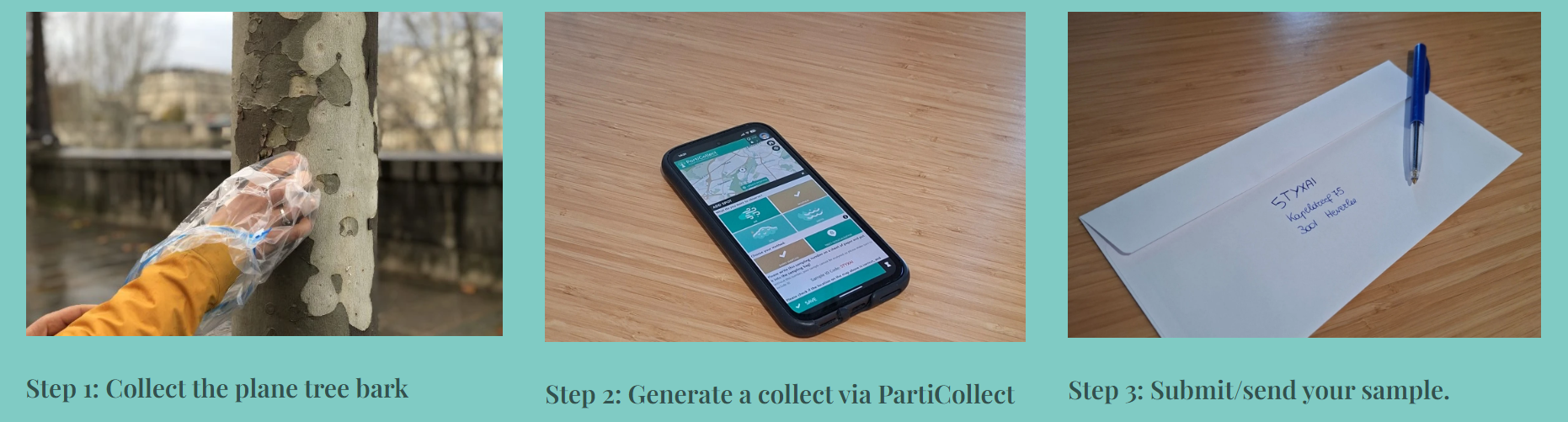
It’s very simple: just collect a few pieces of plane tree bark when they naturally detach (until the end of April 2026), register the sample via the PartiCollect application, then send it or drop it off at a collection point.
Follow the precise protocol to ensure the scientific quality of the data. The samples will be analyzed by the University of Antwerp, under the direction of Dr. Ir. Roeland Samson.
You can help build solutions
Beyond measurement, this project illustrates a major evolution in research: a more open, collaborative science rooted in society.
By transforming a simple action into a scientific contribution, Ecorc’Air enables everyone to better understand their environment… and to take part in building solutions to a major public health issue.
In Belgium, participatory science is gaining new momentum: more than 240 citizen science projects engage citizens, whose involvement goes far beyond simple data collection.
Everyone can thus contribute to producing knowledge on issues that directly affect our environment and our health, bringing scientific research closer to everyday life for all.
The professor leading the project at UCLouvain is Yannick Agnan.
Find more information on the website of the project.
This article was originally written in French by the AREC team of UCLouvain. It is available to be read here.