The Institute of Condensed Matter and Nanociences (IMCN) of the Université catholique de Louvain (UCLouvain) focuses on condensed matter and nanoscience from the atomic and molecular levels to real materials

This research concerns the synthesis, design, manipulation, implementation and modeling of (bio)molecules, (bio)surfaces and solid materials. The latter are characterized or simulated by means of advanced techniques, which are also sometimes developed as an inherent part of the research. The obtained compounds, materials or devices are then investigated for their functions, properties or reactivity, leading up to applications. 

Thematics in the frame of this general methodology, and resulting research projects conducted in the institute, lead to the study of molecules, materials, surfaces and interfaces, with a strong connotation of nanosciences, nanotechnologies and nanomaterials.

Latest news
2026-01-26
Informatique quantique : une révolution pour nos données !
Retrouvez Matthieu Génévriez sur La Première dans Matin Première pour parler des ordinateurs quantiques. Nos e-mails, nos données bancaires ou encore les secrets de défense pourraient-ils un jour devenir lisibles par tous ? Avec l’essor de l’informatique quantique, cette question n’est plus de la science-fiction. Selon certaines prévisions, comme celles de Saxo Bank, un « Q-Day » pourrait survenir : le jour où les systèmes de chiffrement actuels ne suffiraient plus à protéger nos données numériques. Mais de quoi parle-t-on exactement ? Et faut-il s’inquiéter ?
2026-01-07
Importance of Non-Adiabatic Effects in Kohn Anomalies in 1D Metals
Kohn anomalies are kinks or dips in phonon dispersions which are pronounced in low-dimensional materials. We investigate the effects of nonadiabatic phonon self-energy on Kohn anomalies in one-dimensional metals by developing a model that analyzes how the adiabatic phonon frequency, electron effective mass, and electron-phonon coupling strength influence phonon mode renormalization. We introduce an electron-phonon coupling strength threshold for low-temperature system instability, providing experimentalists with a tool to predict them. Finally, we validate the predictions of our model against first-principles calculations on a 4 Å-diameter carbon nanotube
2026-01-07
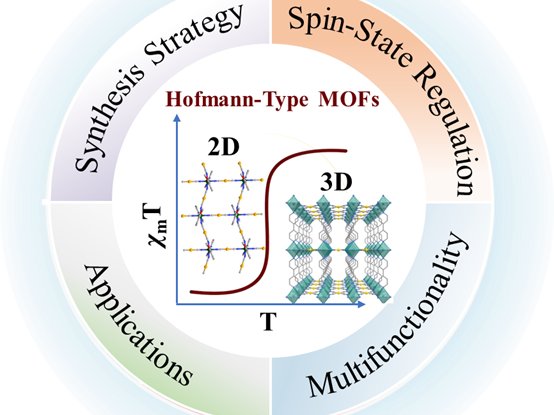
Three-Step Spin Crossover in a Pseudo-3D Hofmann-Type Complex Originating from Anisotropic Supramolecular Interactions
The development of multistep spin crossover materials is of considerable interest for molecular information processing and sensing applications and remains synthetically and mechanistically challenging. Herein, we present the first iron(II) two-dimensional Hofmann structure containing 1,2,4-triazole derivatives and [Au(CN)2]− units, namely, Fe(MeOPhtrz)2[Au(CN)2]2 (1, MeOPhtrz = (E)-1-(2-methoxyphenyl)-N-(4H-1,2,4-triazol-4-yl)methanimine). The complex exhibits a temperature-induced three-step spin crossover behavior, confirmed by magnetic susceptibility, differential scanning calorimetry, Raman spectroscopy, single-crystal X-ray diffraction (SXRD), and optical microscopy. SXRD reveals a pseudothree-dimensional structure assembled through multiple intermolecular interactions, including hydrogen bonding, π–π stacking, and π–Au interactions. These interactions contribute to an anisotropic supramolecular framework that induces a multistep spin crossover process. The sequential spin transition is likely driven by the differential rigidity along the crystallographic axes and the varied response of Fe–N bond lengths, leading to distinct transition steps. This study highlights the significance of supramolecular interactions in governing spin crossover properties and opens new avenues for the design of 2D Hofmann-like materials with tunable functionalities.