

Urban gullies that put millions of Congolese at risk quantified and mapped
eli | Louvain-la-Neuve
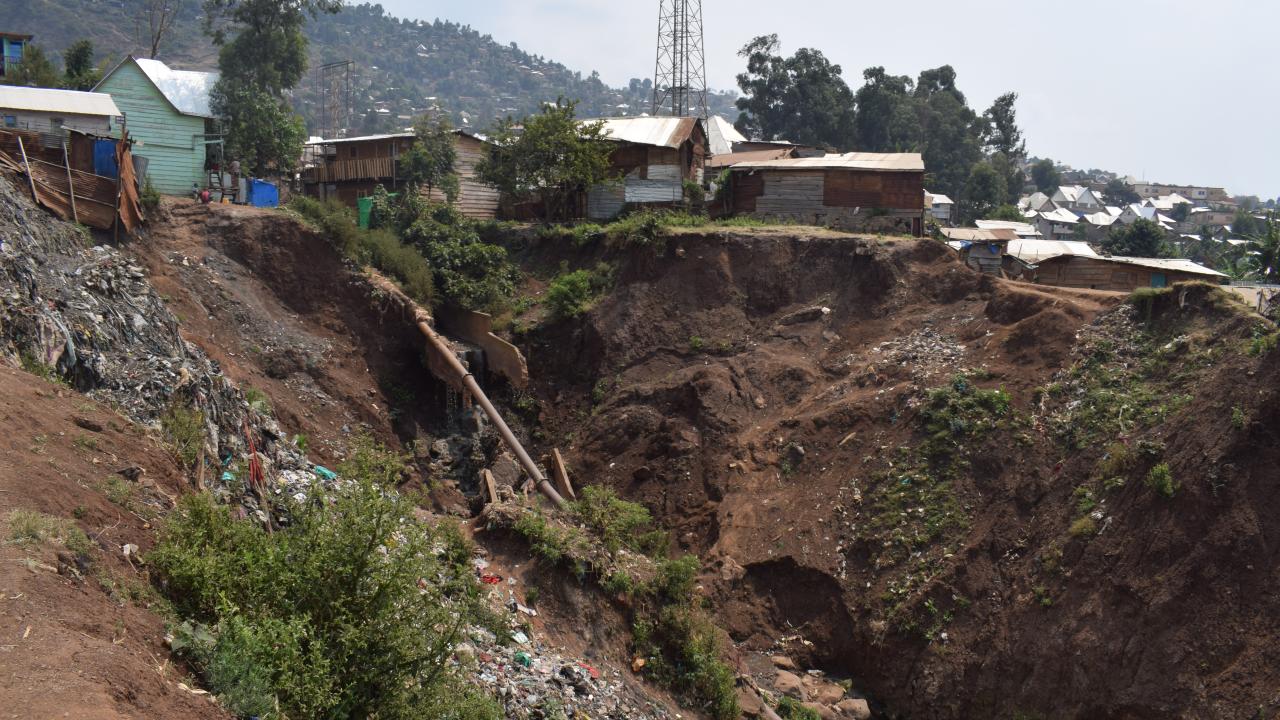
New research involving ELI researchers has just been published in the prestigious journal Nature. It quantifies the underestimated phenomenon of urban gullies in DR Congo. Every year, 12.000 Congolese lose their homes due to the expansion of these ravines. The research team is calling for better urban space management and prevention plans.
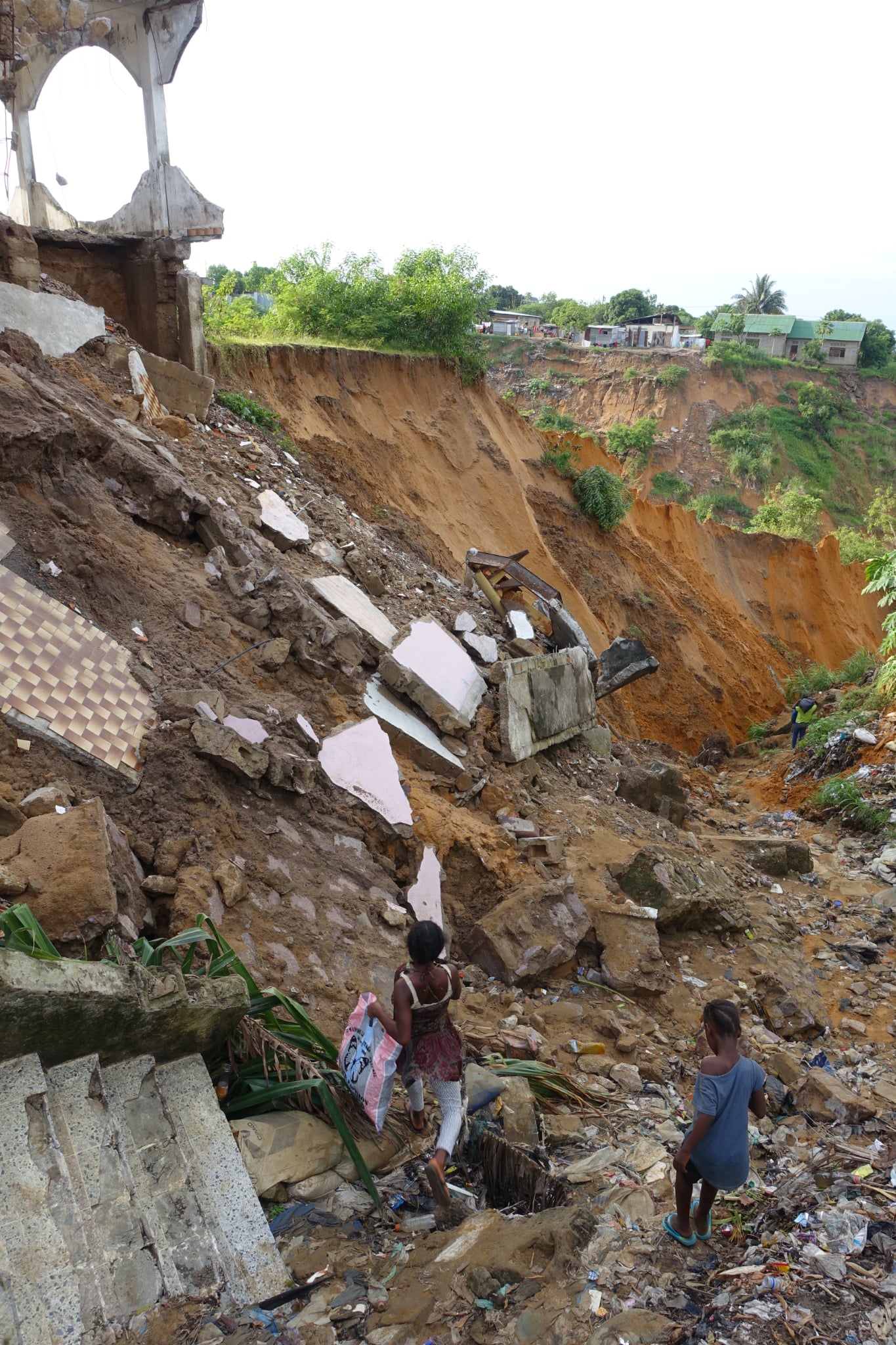
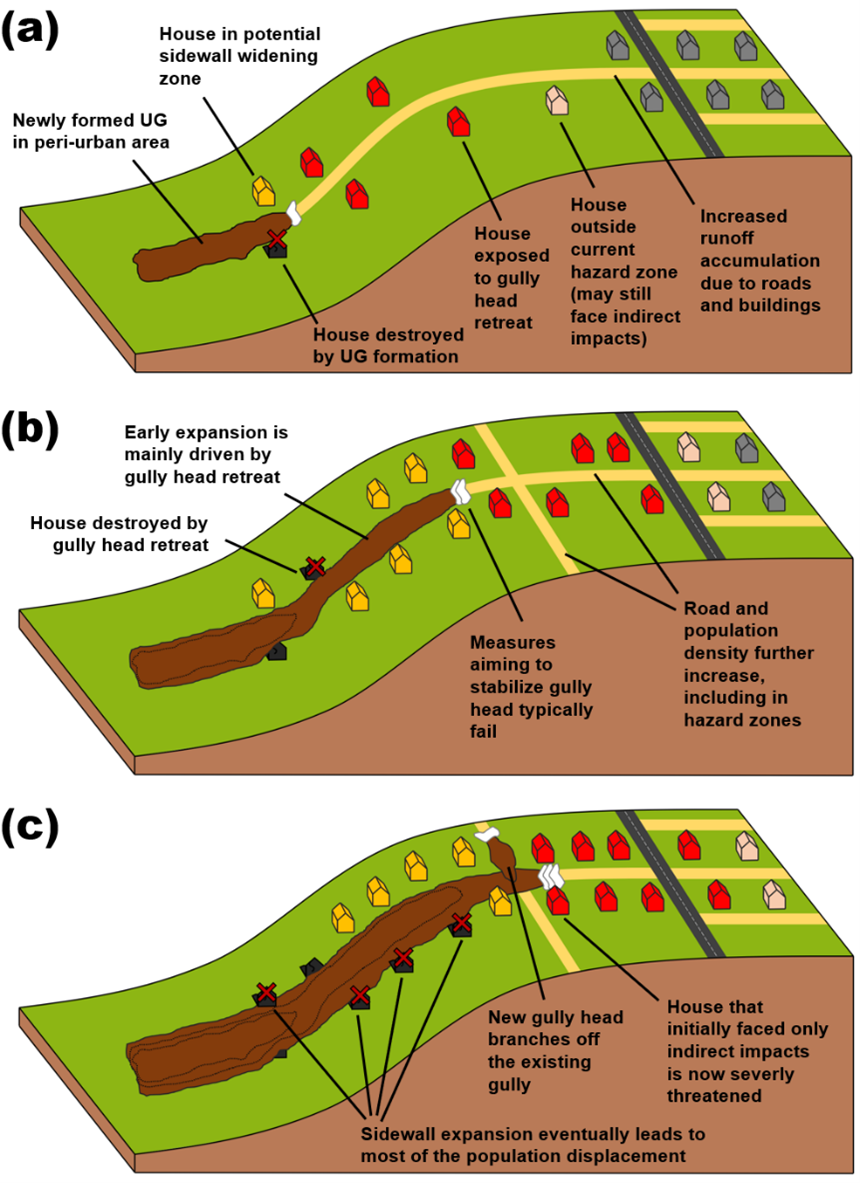
Urban gullies are large, deep erosion channels that suddenly form in urban areas. Triggered by intense rainfall, they are commonly the consequence of uncontrolled urbanisation, poor spatial planning and inadequate infrastructure.
This largely man-made geo-hydrological hazard — typical for the Anthropocene — can lead to important impacts on people, houses and infrastructure. However, comprehensive assessments of the occurrence of urban gullies and their impacts were lacking.
Researchers Guy Ilombe Mawe, Eric Lutete Landu, Elise Dujardin, Fils Makanzu Imwangana, Charles Bielders, Aurélia Hubert, Caroline Michellier, Charles Nzolang, Jean Poesen, Olivier Dewitte, and Matthias Vanmaercke have examined this still under-explored issue.
In this research, just published in Nature, they mapped over 2900 urban gullies across 26 cities in the Democratic Republic of the Congo (DR Congo). These gullies already have a combined length of more than 730 km.

The research team show that, currently, around 12.000 people per year lose their home due to the formation and expansion of these gullies. Over 3 million urban Congolese residents live in the potential expansion zones of existing gullies and face important risks.
Hence, these urban gullies are an underestimated and growing threat, not only in the DR Congo but in many cities across the Global South. Nevertheless, they are very rarely recognised as a hazard or taken into consideration in policies for disaster risk reduction.
This research is the result of a join effort of a team of Congolese and Belgian researchers. In Belgium, the GeoRisKA team (AfricaMuseum), the Earth and Life Institute team (UCLouvain), researchers from KU Leuven and ULiège were involved. In DR Congo, researchers from Université Officielle de Bukavu, Université de Kinshasa, Geological and Mining Research Center Kinshasa were involved. The Maria-Curie Sklodowka University Lublin (Poland) was also involved.
The article can be found here (OpenAccess).
More information can be found on Nature news website, on the AfricaMuseum website, and on SpringerNature website.
Banner photo: ©Guy Ilombe Mawe