

From the Arctic to schools in Hainaut: raising climate awareness among young people
eli | Louvain-la-Neuve

UCLouvain, and more specifically the Earth and Life Institute, is known for its research on permafrost (permanently frozen soil in the Arctic) under the supervision of Sophie Opfergelt, professor and researcher.
These soils are veritable carbon sinks, but today, under the effect of climate change, they are releasing significant amounts of carbon, contributing to the increase in greenhouse gases and amplifying global warming.
Talks in schools
As part of this research, Maëlle Villani, a PhD student at UCLouvain who has participated in several scientific missions to the Arctic, has developed a project to raise awareness on Arctic warming among primary and secondary school students.
She gives talks in schools in the province of Hainaut, particularly in schools with a low socio-economic index (ISE). She has already led more than a dozen workshops for 150 students.
Speaking about climate change
Her vision? The Arctic is a great opportunity to talk to young people about climate issues.
Using photos taken in the field, stories about scientific missions, and interactive activities, students learn about the Arctic, why UCLouvain scientists go there, and how scientific research helps us better understand the environmental changes that are ongoing.
These workshops also provide an opportunity to introduce students to the scientific profession and spark their curiosity and interest in science.
By making scientific concepts accessible and concrete, these activities enable students to connect a distant environment to very real impacts on their daily lives.
The exchanges continue beyond the classroom, with students sharing their discoveries with their families.
A photo exhibition
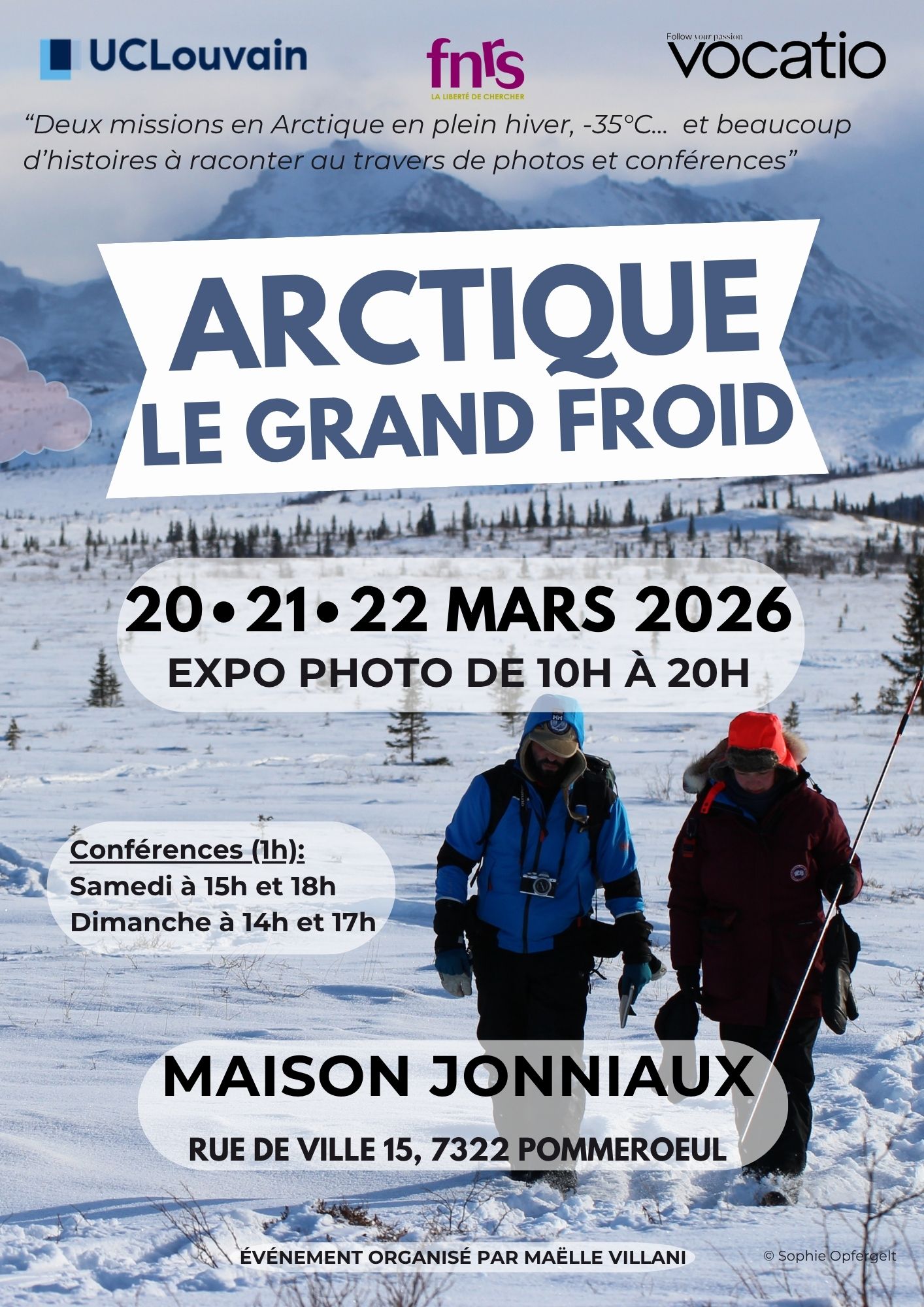
This scientific outreach work will continue through a photo exhibition and conferences organized by Maëlle Villani in Pommeroeul, Hainaut, on March 20, 21, and 22, 2026, which will be open to the general public.
Find more information about this event here.
This article was originally written in French by the AREC team of UCLouvain. It is available to be read here.