

Transition Week: walking, planting, and sharing ideas to create the world of tomorrow
eli | Louvain-la-Neuve
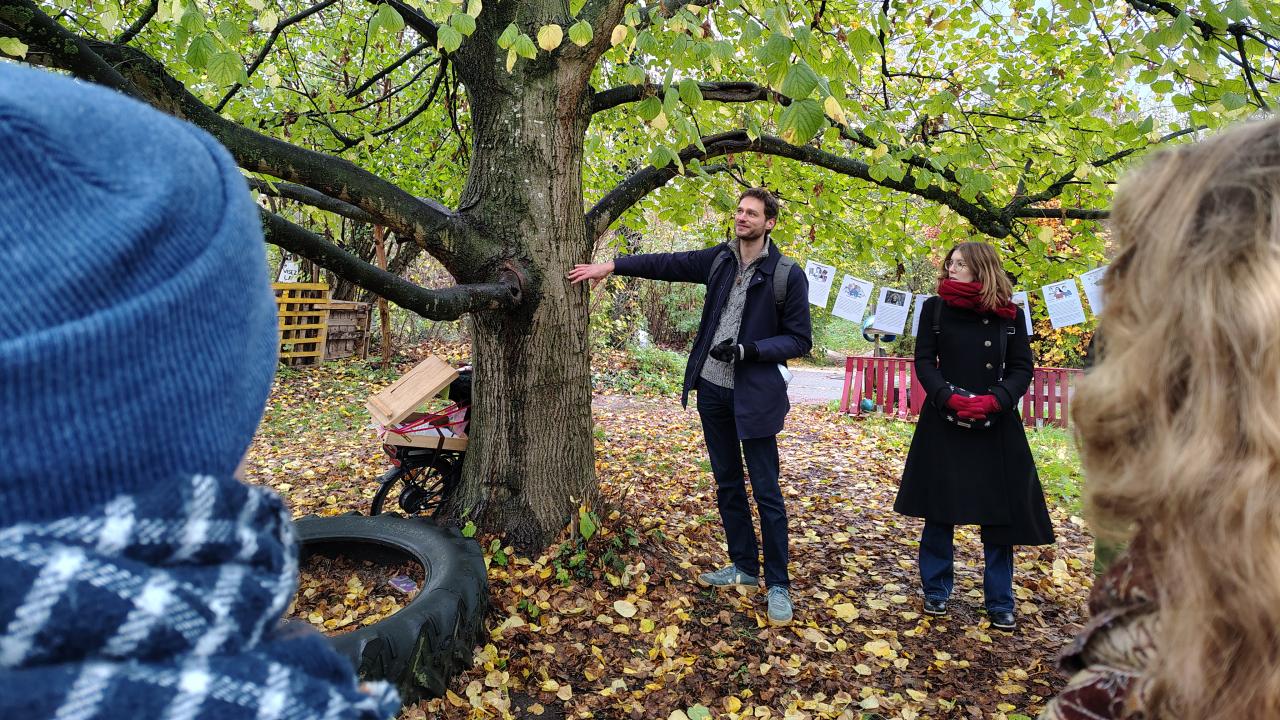
From November 17 to 21, UCLouvain celebrated the Transition Week. The event was a great success, featuring tree planting projects, conferences, workshops, and inspiring meetings.
The Earth and Life Institute also played a major role in the Transition Week, with numerous activities prepared and/or conducted by our members, as well as significant participation by ELI members in university activities.
Here's an overview of some of the highlights of this enlightening week.
600 years, 600 trees
A big highlight of this edition was the planting of 600 native trees on the campuses of Louvain-la-Neuve, Mons, Tournai, Saint-Louis, Saint-Gilles, and Woluwe.
The objectives were to enhance biodiversity, create islands of coolness, and improve the living environment for everyone.
Thomas Dagbert was one of the tree planters in Louvain-la-Neuve.

Rediscover below the video of the project.
Students4Food: Inspirational Talks Event
As part of the World Food Forum, the Brussels office of the Food and Agriculture Organization of the United Nations (FAO) invited students to express their views and researchs.

This event was an opportunity for students and doctoral candidates enrolled at a Belgian university to give an inspiring presentation offering new ideas and knowledge related to the theme “Hand in Hand for Better Foods and a Better Future” to a multidisciplinary audience.
Many different presentations were given, offering perspectives on the future of global food production, with a view to feeding the planet while better respecting planetary boundaries.
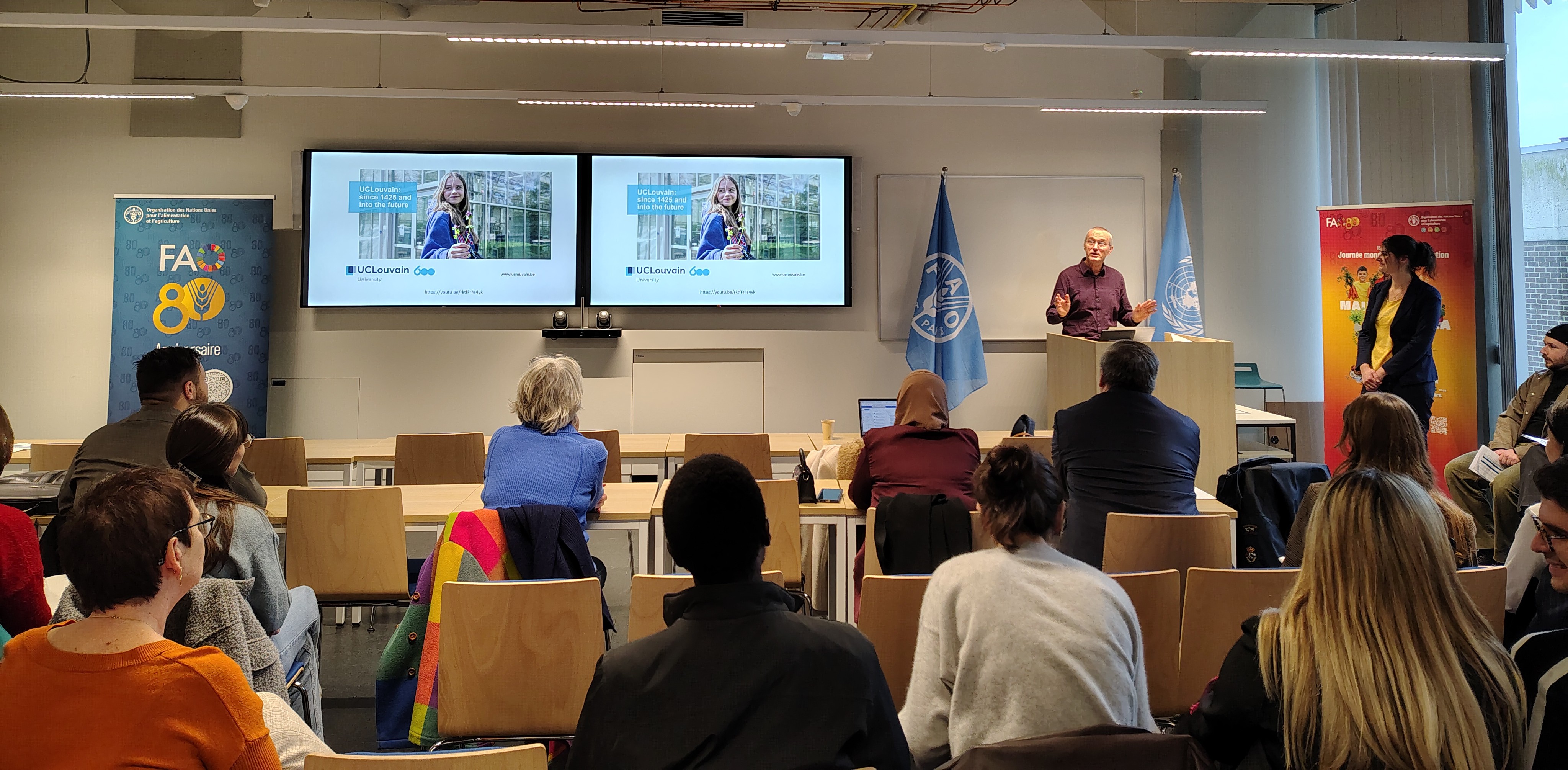
Marnik Vanclooster gave an introductory speech, underlining the importance of agricultural and food research at the Earth and Life Institute.
Meeting for sustainable laboratories
At the heart of the university's mission to advance knowledge, research is also very energy- and resource-intensive. At UCLouvain, in 2021, laboratory purchases accounted for 18,4% of the carbon footprint.
In its second transition plan, the university has two actions planned to reduce this impact: widespread adoption of LEAF certification and a simplified carbon footprint assessment for each entity.
At the Earth and Life Institute, ELI-V's laboratories have already been awarded LEAF certification. The project was led by Julie Jadoul and Linda Dhondt, and earned ELI-V a bronze medal.
This awarding of the label was the subject of a dedicated article, which can be read here (in French) to learn more about LEAF certification.
Interactive tour: Experience citizen science
Researchers from UCLouvain, in collaboration with Scienceinfuse, have organized an activity to invite the general public to discover several citizen science projects carried out at the university, through an interactive tour in the streets of Louvain-la-Neuve.
At each stage, posters presented these initiatives, accompanied by activities that could be carried out independently to enable participants to experience citizen science in a practical way.
This trail was a great opportunity for everyone to discover citizen science. It also illustrates in a concrete way the richness of collaborations between scientists and citizens.
Discover the route below in video, with Caroline Michellier.
Walking with wild grasses: Biodiversity through the lens of art, research, and feminism
Like ecological transition, wild grasses are herbs that grow where they please. They refer to groups that wander and are full of other resources.

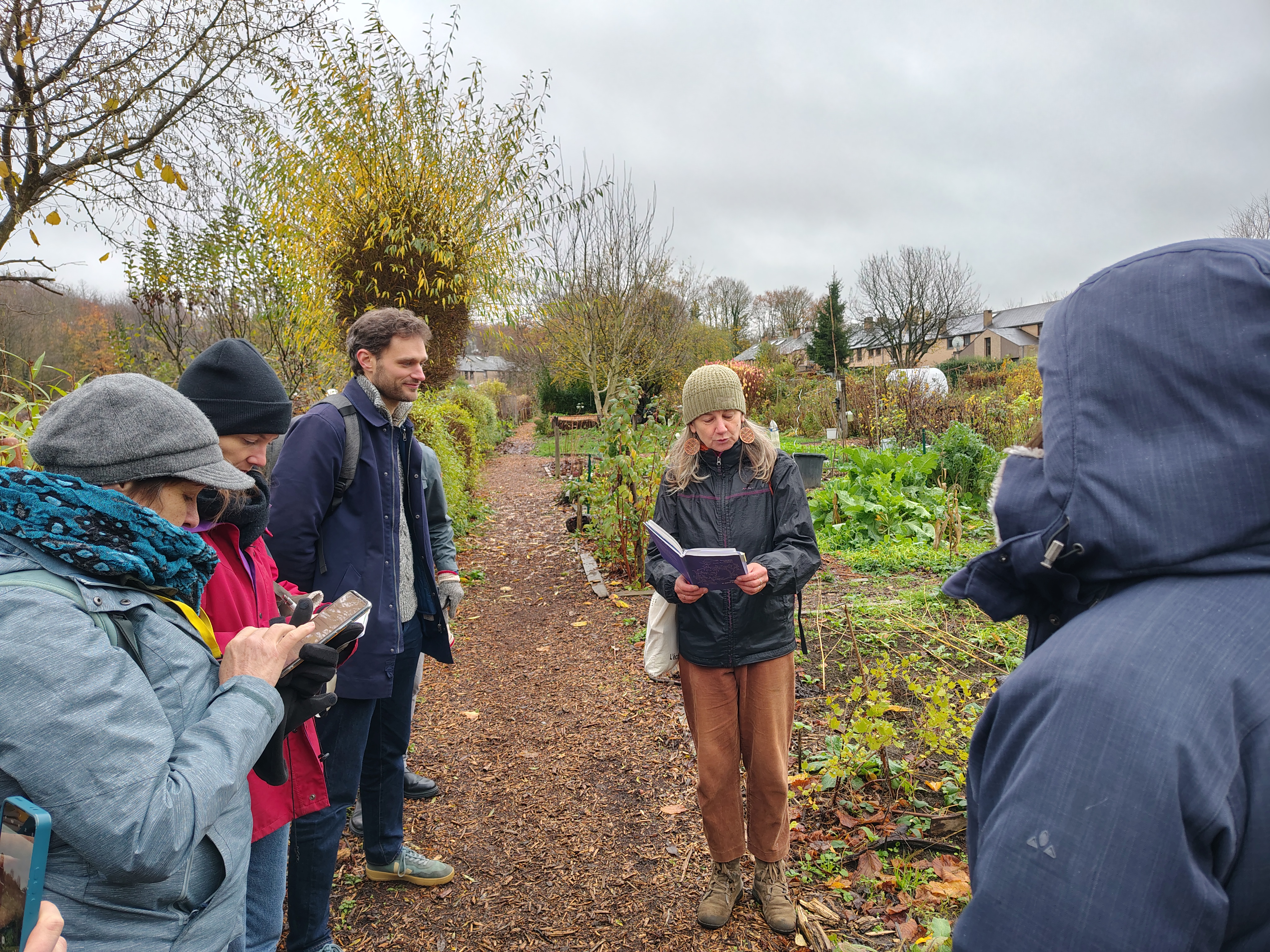
Valentin Couvreur (bioengineer), Véronique Bragard (art and literature), and Lidia Rodriguez Prieto (feminist studies) offered a workshop on gathering creative observation methods. With a small group, they explored a path marked by various languages and methodologies: from the poetic to the anthropological, from the academic to the activist, from the ecological perspective to the feminist perspective.
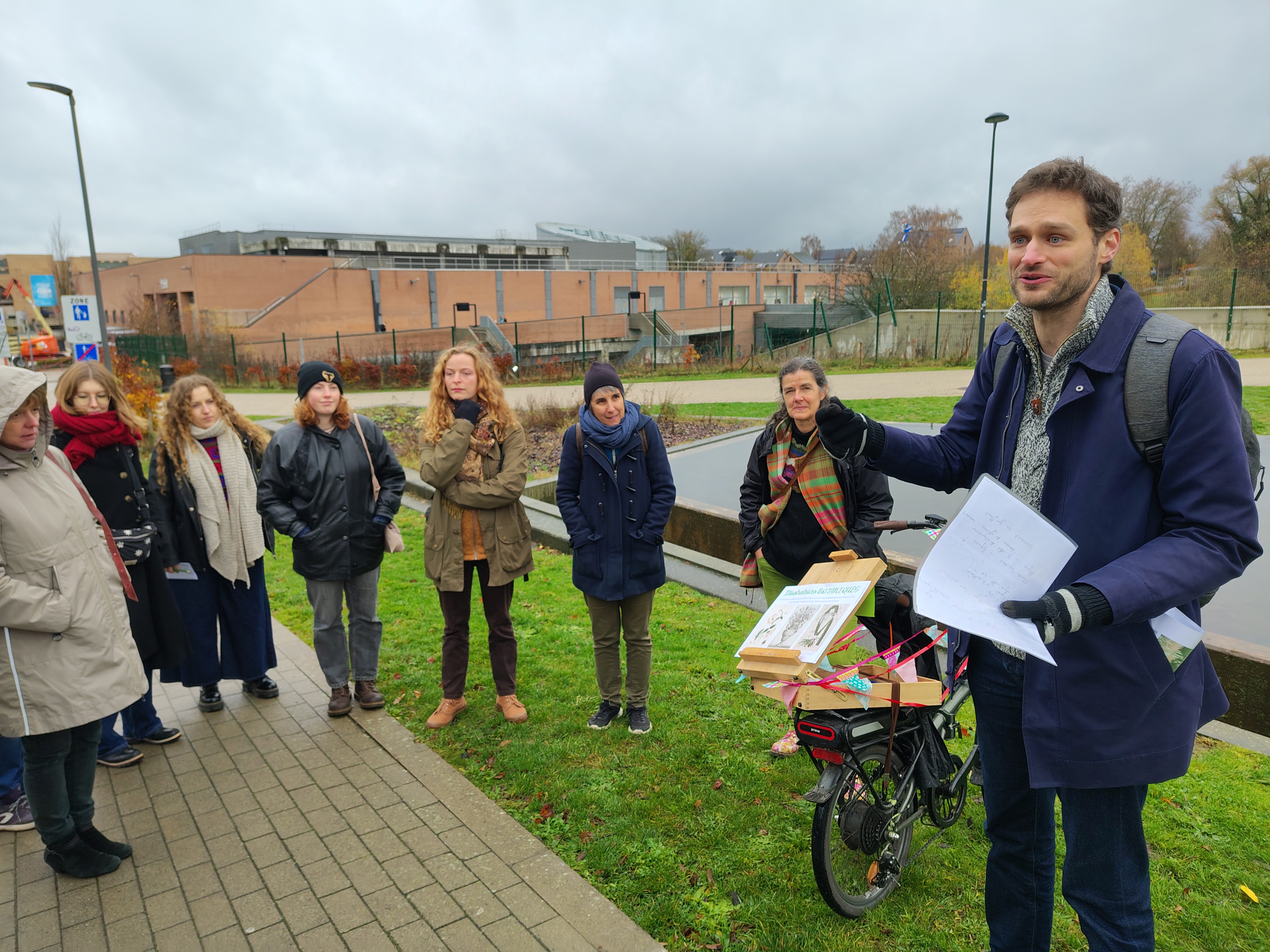
They talked about plants far beyond the herbariums of childhood. It was about observing but also being observed by the grasses.
The discussions and insights were both varied yet intrinsically linked. From the importance of learning to appreciate the wild herbs growing along a sidewalk where we have been taught to think they have no place, to restoring women to their rightful place at the center of the history of botanical illustration, this walking conference taught us many things. One of them is that Brussels, etymologically speaking, means “swamp house”, and that there is a profound serenity to be savored in our gardens, between the sage and the rosemary.
Exhibition and round table discussion: The journey of women farmers
Going beyond the clichés that impose the image of a male farmer, Justine Havelange traveled the region by train and bicycle to meet the women who feed us. Her photos were exhibited during the Transition Week.
In Belgium, only 16% of farms are run by women, but this dynamic is changing. To understand the realities of our Walloon women farmers and highlight their careers, the young journalist conducted investigative work with four women farmers who did not come from an agricultural background. She asked them about the challenges of training, access to land, working conditions, and ways to reinvent traditional farm models.
To explore the themes of this exhibition, a roundtable discussion on gender and agriculture was organized with Sophie Henrotte and Julie Hermesse.

Evening debate on climate: How far should the University commit itself?
In the United States, the Trump administration's attacks on universities are increasing, climate denialism is being expressed more and more openly everywhere, and the challenges of environmental and social transition seem to have fallen significantly down the political agenda... even though everything points to the urgent need for action.
Faced with this situation, what stance should scientists and universities take? How far should they go? How can they combat obscurantism and misinformation and make the voice of science heard? Ultimately, how can they resist?
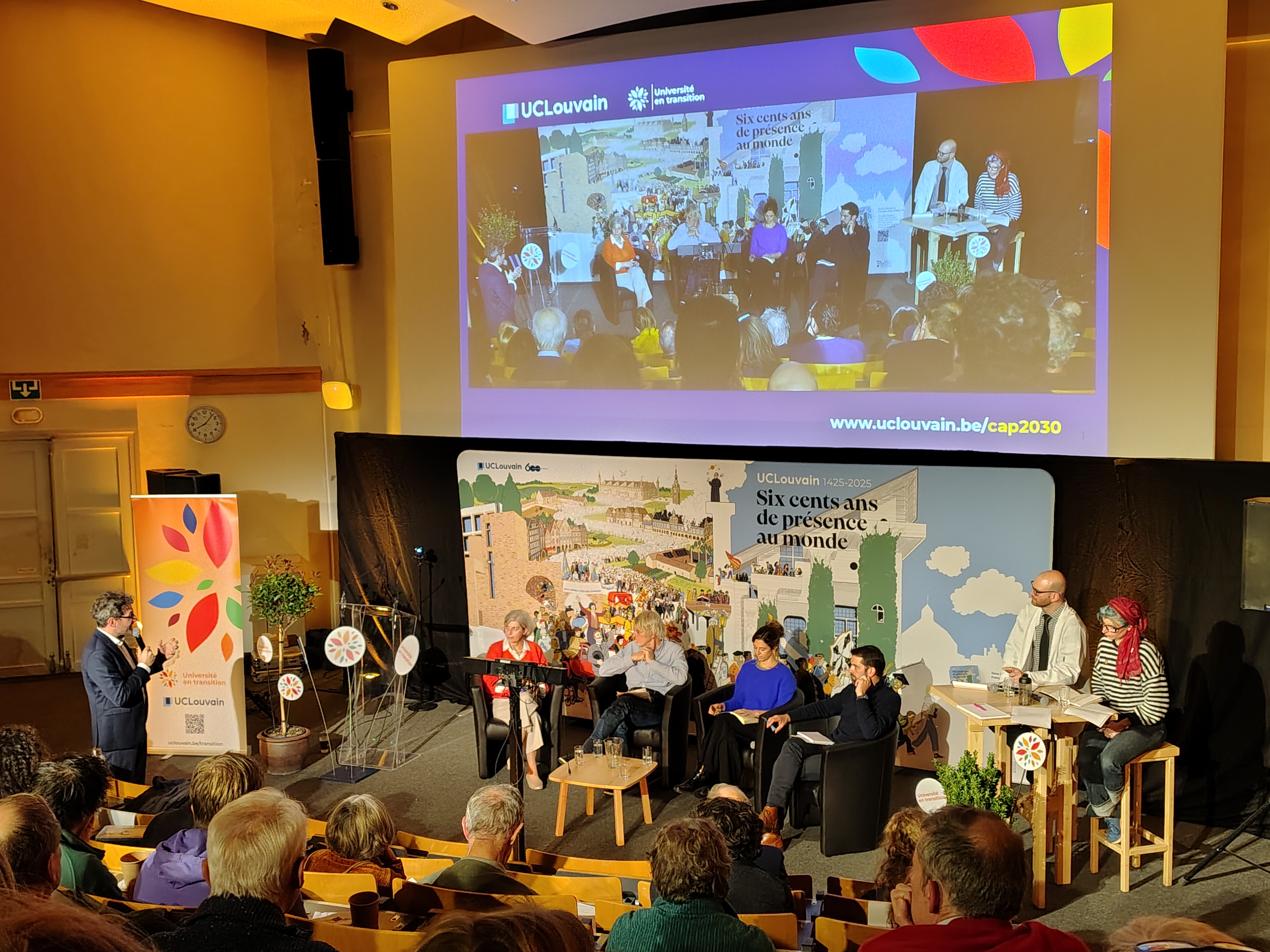
These are the complex but crucial questions that François Massonnet, Céline Romainville, Philippe Van Parijs, and Agnès Guiderdoni attempted to answer throughout the conference.
Each participant, speaking from his or her perspective as a researcher on the one hand and as a concerned citizen on the other, was able to contribute with perspectives and reflections.

The debate was moderated by journalist Arnaud Ruyssen and preceded by a contextual overview provided by Marthe Nyssens, Françoise Smets, and Alexia Autenne. All three presented the progress made by UCLouvain in its efforts to become an increasingly sustainable and committed university.
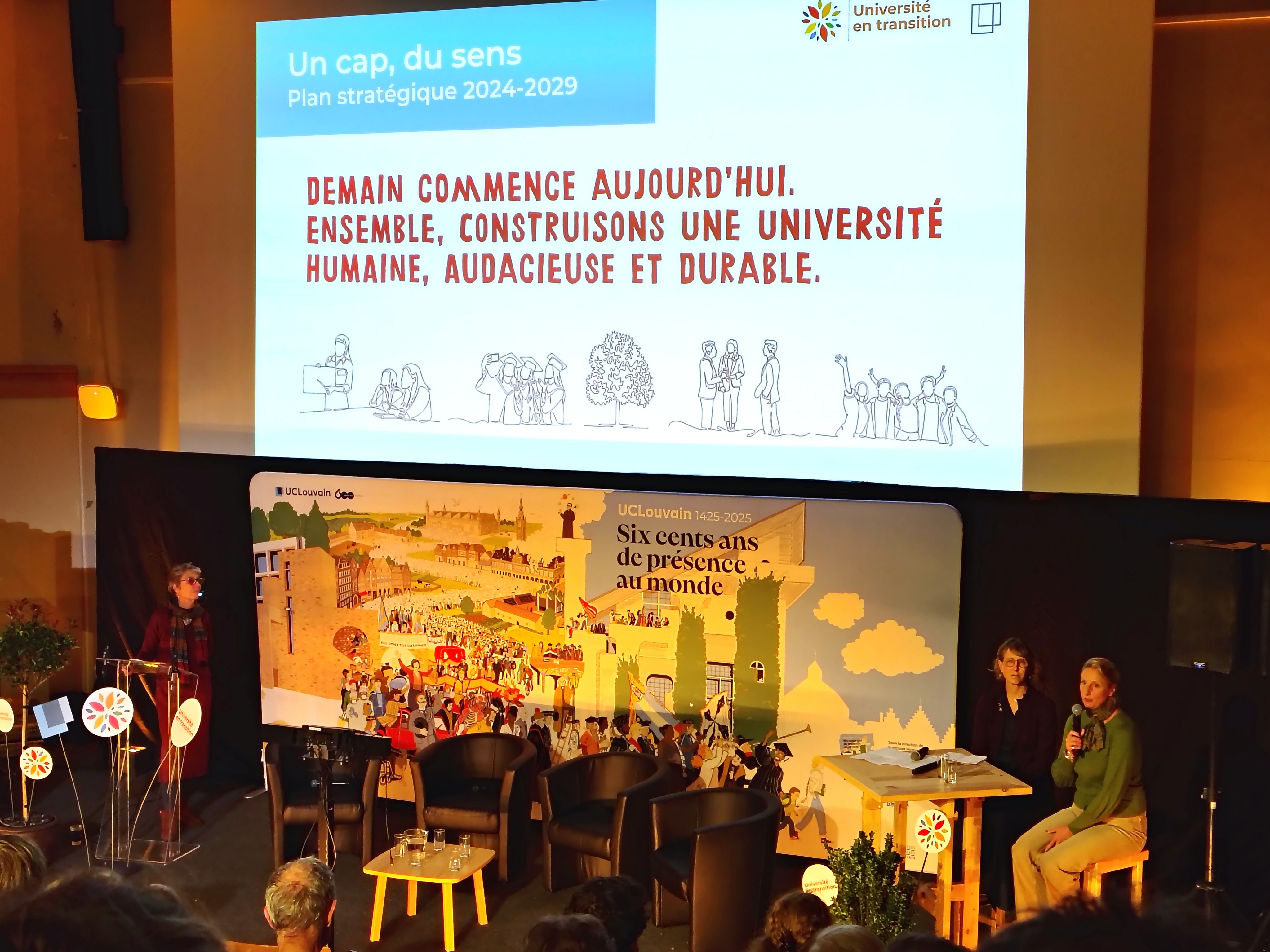
Eric Lambin appeared in a video presentation, discussing the role that researchers can play in a world in turmoil. Finally, Sophie Henrotte, who has just begun her doctoral thesis, spoke about the impact of becoming a researcher on her activism.

The CAP 2030 Plan
This list of activities is, of course, not exhaustive. Many other activities have been organized and enjoyed by ELI members or other entities at UCLouvain.
Read the official review from UCLouvain (in French) here. And watch the aftermovie below.
The Transition Week also marked the official launch of UCLouvain's second Transition Plan, "CAP 2030", an ambitious new step toward ensuring that our teaching, research, and community service missions respect planetary boundaries. Discover the “CAP 2030” plan here.
Article: Emmeline Van den Bosch. Excerpts from texts have been taken from descriptions of events in the Transition Week program.
Photos: Emmeline Van den Bosch, unless otherwise specified.